
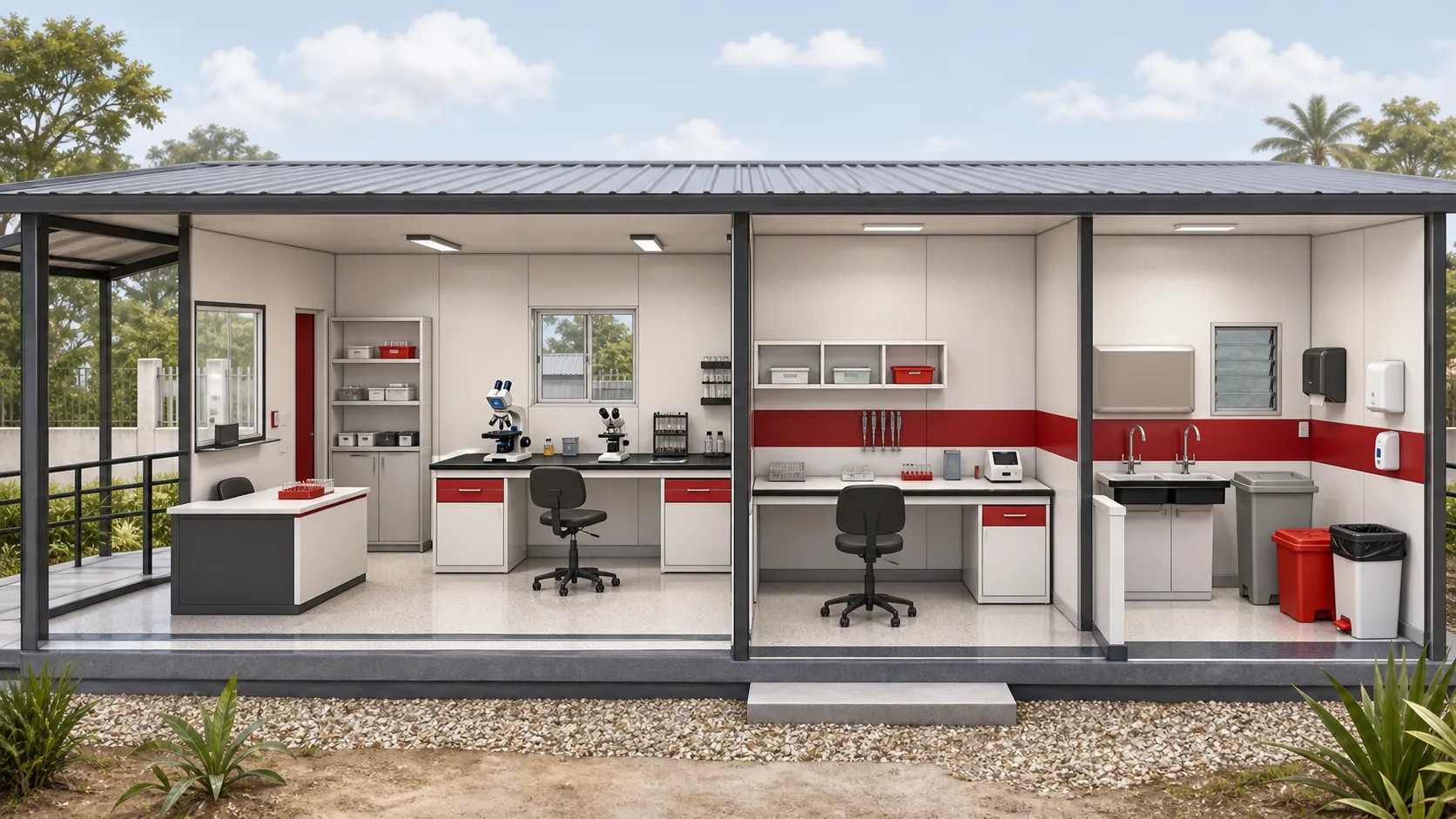
A microscope does not make a laboratory ready. Responsible malaria testing support depends on the room, the people, the workflow, the quality system and a safe route to clinical care all working together.
Tanale status: this is a facility-planning research note. It does not claim that Tanale Foundation currently operates a clinical diagnostic laboratory, and it is not medical advice.
1. Begin with a defined and authorised purpose
The first readiness question is not “Which microscope should we buy?” It is “What work is authorised here?” Training, quality assurance, community research and clinical diagnosis carry different responsibilities. The scope should identify who may request work, who may perform it, who may authorise information and when a specimen or result must be referred elsewhere.
2. Separate the movement of people, specimens and waste
A small facility still needs controlled flow. Public reception should not open directly onto specimen preparation. Clean supplies should not share a route with used materials. Records and results require privacy. Waste should move toward controlled treatment or authorised disposal without returning through public areas.
- Private reception, request review and unique specimen coding.
- Clean preparation space for slides, stains and rapid-test materials.
- Examination space protected from unnecessary traffic and vibration.
- Controlled storage for reagents, records and retained materials.
- Hand hygiene, spill response, sharps control and separated waste routes.
3. Treat water, power and temperature as quality controls
Reliable water supports hand hygiene and cleaning. Stable power supports lighting, equipment and secure records. Temperature can affect reagent and rapid-test performance. A readiness plan therefore needs monitored storage, backup arrangements for critical equipment and documented action when conditions move outside an approved range.
4. Verify people, procedures and supervision
Competency is demonstrated, assessed and renewed; it is not assumed from a job title. Each method needs a controlled standard operating procedure, supervised practice, maintenance records and a route for second reading or external quality assessment. Discrepancies should trigger review and corrective action—not a forced result.
5. Establish referral before opening a workflow
A responsible laboratory plan identifies an authorised clinical and reference-laboratory relationship before testing support begins. The plan should say how urgent concerns are escalated, how uncertain or complex work is referred and how information is released without using a public contact form or ordinary email as a medical-record system.
Readiness questions for partners
- What exact work is approved, and what is outside scope?
- Who is accountable for biosafety, quality and result authorisation?
- How are competency, equipment, storage and environmental conditions verified?
- What happens when quality control fails or utilities are interrupted?
- Which authorised facility receives clinical and reference referrals?
Technical references
WHO: Diagnostic testing for malaria
WHO Laboratory Biosafety Manual, fourth edition